How to Get Water From Air: A Field Guide to Atmospheric Water Harvesting
Five methods, from powered generators to zero-energy fog nets, and how to pick the right one for your climate and your power situation.
Every liter of drinking water most people rely on comes from a river, a reservoir, or a pipe that someone else controls. The atmosphere is the one water source that sits over every location on earth, all the time, independent of infrastructure. It will not replace a reliable well or a stocked water supply, but as a backup layer or a bridge during an outage, it is worth understanding, because the right method depends entirely on your climate and your power situation.
There are two families of technique. Powered methods use energy, either electrical or thermal, to pull water out of the air even when it is fairly dry. Passive methods use no power at all, but need the right natural conditions, such as fog, a clear cold night, or strong sun over moist ground.
The physics in plain terms
Air holds water vapor, and how much it can hold depends on temperature. Cool that air enough and it hits its dew point, the temperature at which the vapor starts condensing into liquid. That is the entire trick behind every powered method: get air below its dew point, or pull the water vapor out chemically, and gravity does the rest.
| Warmer air holds more moisture, so hot humid climates are the easiest environment for condensation-based extraction. |
| Cooling-based systems need a minimum humidity, generally in the 32 to 40 percent range, and air temperature a few degrees above freezing, to work efficiently. |
| Adsorption and desiccant systems get around the humidity floor by chemically binding water vapor rather than cooling air, which is why they can operate down to roughly 20 percent relative humidity. |
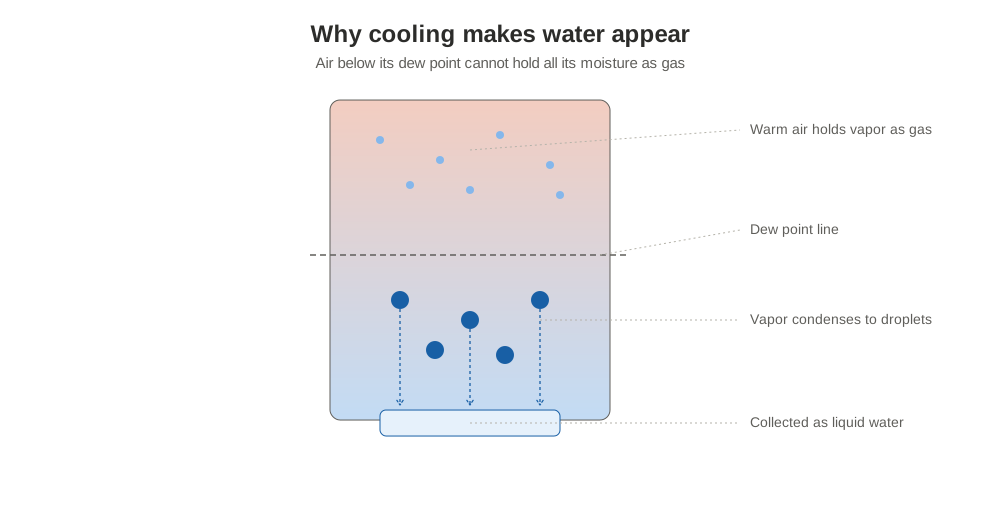
Figure A. Cooling air below its dew point is what makes water condense out of thin air.
Powered methods
1. Compressor-based atmospheric water generator
This is the same principle as a home dehumidifier or an air conditioner. A fan pulls air across an evaporator coil chilled by refrigerant, the air drops below its dew point, and water condenses out. The resulting water is then filtered and re-mineralized before storage. This is the most common commercial AWG design and performs best in warm, humid climates.
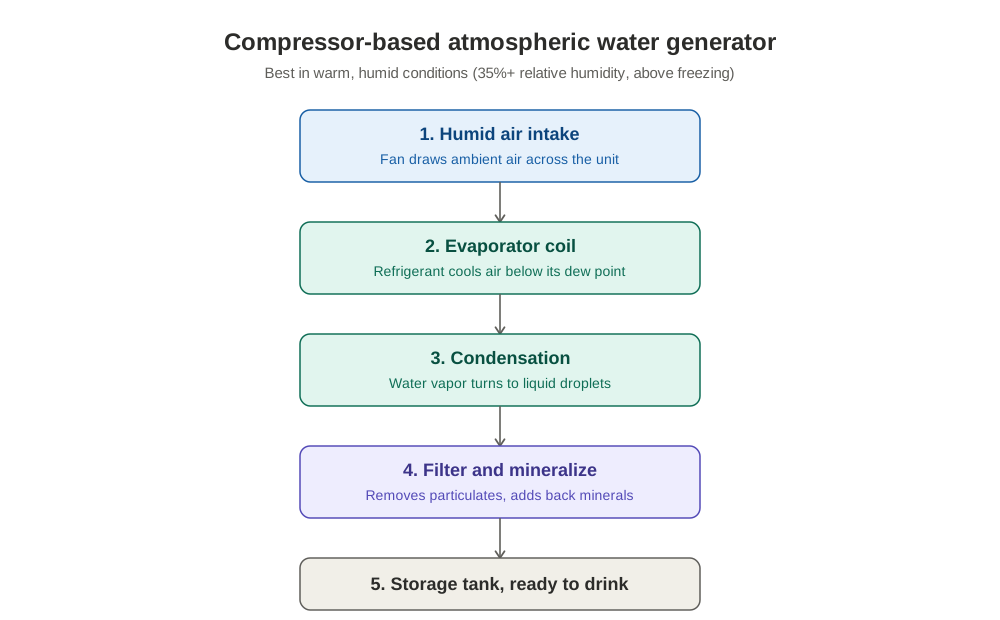
Figure 1. The compressor-based atmospheric water generator cycle.
2. Desiccant and adsorption systems
Instead of cooling the air, this method passes it over a hygroscopic material, silica gel packed into a honeycomb structure, or a liquid desiccant such as lithium chloride, that grabs water vapor directly. Waste heat or solar thermal energy is then used to release, or desorb, that water so it can condense and be collected. A 2024 sorbent-based system demonstrated 5.8 liters per kilogram of sorbent per day at just 30 percent humidity, and this approach is generally considered the most efficient and sustainable option when solar thermal power is available.
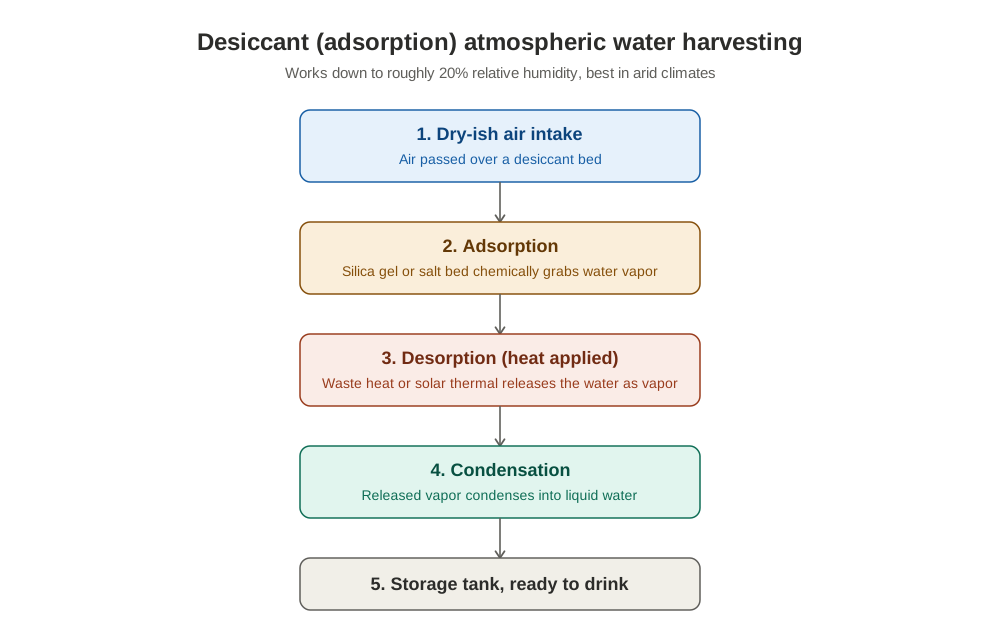
Figure 2. The desiccant, or adsorption, atmospheric water harvesting cycle.
3. Thermoelectric (Peltier) units
Small, portable AWGs sometimes use the Peltier effect, where a semiconductor junction creates a cold side and a hot side when current runs through it, replacing the refrigerant compressor entirely. A solar-powered thermoelectric test unit produced a maximum of 25.5 milliliters per hour at 65 percent relative humidity and 35 degrees Celsius, dropping to 11.5 milliliters per hour at 35 percent humidity. That output makes this a personal-ration technology, not a household water supply, but it is compact, has no moving refrigerant loop, and pairs well with a small solar panel.
Passive, zero-energy methods
4. Fog nets
A fine mesh screen strung between posts, angled across the direction of prevailing fog-bearing wind, intercepts droplets as fog passes through. The droplets cling to the mesh fibers through surface tension, run down into a gutter, and drain into storage. This is a genuinely old idea. Air wells built on similar logic are believed to date back to the ancient Greeks, and modern versions have transformed water access at real scale: the village of Chungungo in Chile’s Atacama Desert collects over 2,000 gallons a day from 100 fog nets, and Morocco’s Dar Si Hmad project now supplies clean water to more than 400 people daily.
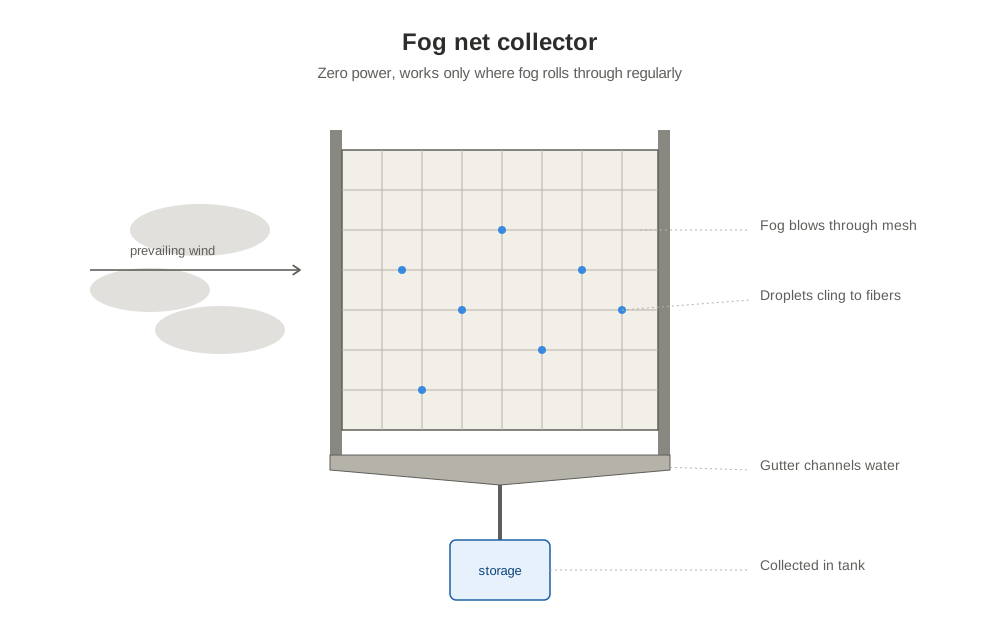
Figure 3. A fog net collector: mesh panel, gutter, and storage tank.
5. Solar stills
The classic desert survival build. Dig a pit, line the bottom with moist soil or fresh vegetation, place a collection cup in the center, and stretch plastic sheeting over the opening with a small stone weighting the middle. Sunlight heats the pit, moisture evaporates, condenses on the underside of the plastic, and runs down to the low point created by the stone, dripping into the cup. Yield is modest, often well under a liter across a full sunny day, but it produces distilled water and needs nothing beyond plastic sheeting, sun, and a shovel.
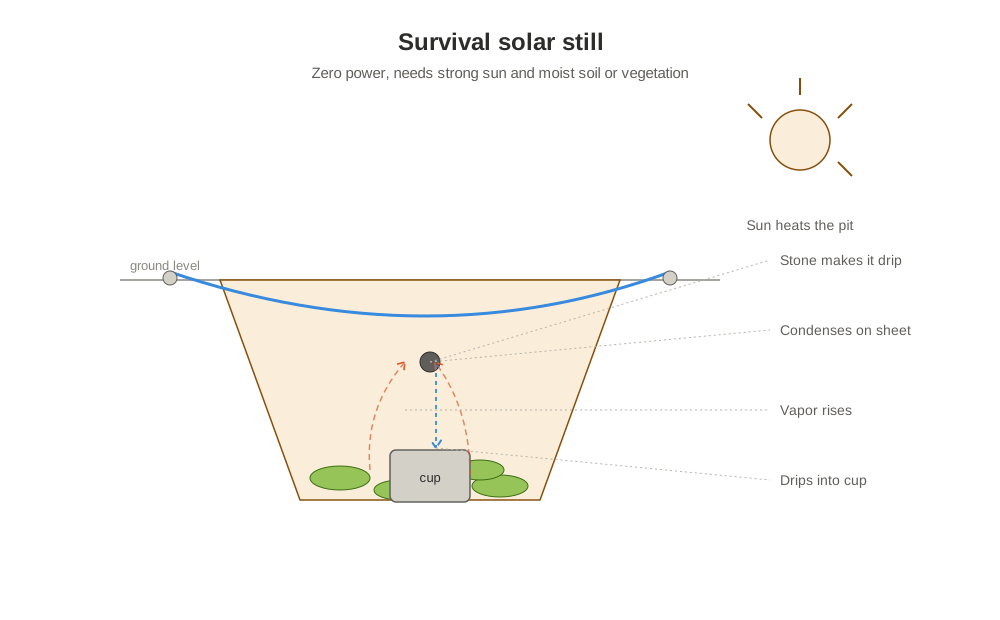
Figure 4. Cross-section of a survival solar still.
6. Dew sheets and dew traps
Laying a clean tarp or absorbent cloth flat overnight, staked down and sloped toward a central low point, lets condensation collect as the air cools. In the morning, the sheet is wrung out into a container. This works almost anywhere with a clear night sky and a meaningful day-to-night temperature swing, since radiative cooling is what drives the condensation, and it requires no fuel, no sun, and almost no setup time.
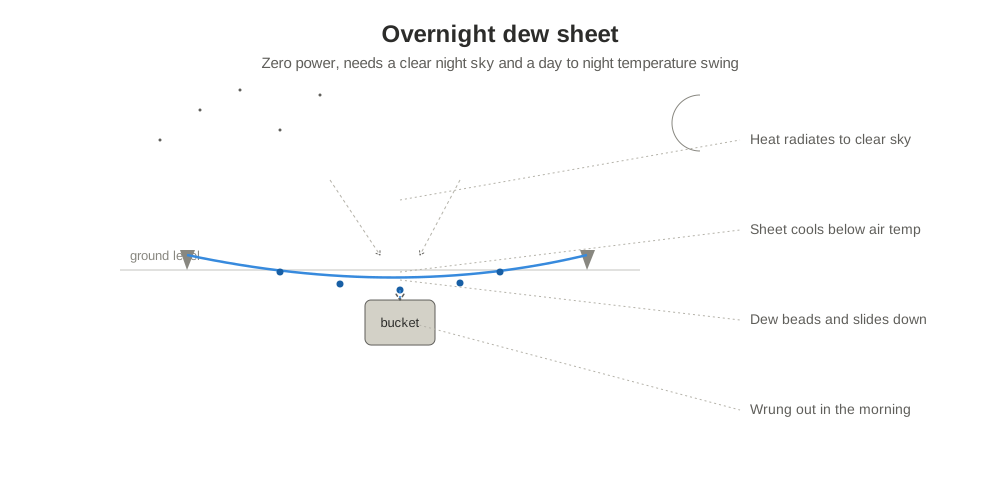
Figure 6. An overnight dew sheet collecting condensation as the air cools.
7. Plant transpiration bags
A clear plastic bag sealed around a leafy branch captures the water vapor plants release through transpiration. Left in direct sun for a full day, the bag accumulates a few spoonfuls of water per branch, pure of bacteria and most chemical contaminants, though the yield per bag is small enough that this method is best used across many branches at once.
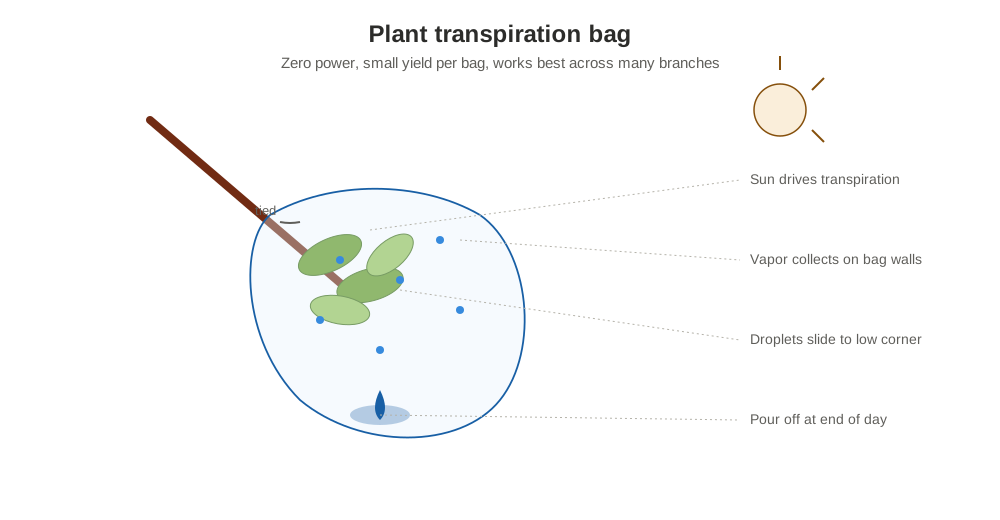
Figure 7. A transpiration bag capturing water vapor released by a leafy branch.
Comparing the methods
| Method | Power needed | Humidity floor | Typical yield | Best use case |
| Compressor AWG | Grid or generator | Around 35% RH | Liters per day, home scale | Homes, off-grid with generator |
| Desiccant / adsorption AWG | Heat source | Around 20% RH | Several liters per kg of sorbent per day | Arid climates, solar-thermal setups |
| Thermoelectric (Peltier) | Small solar or battery | Around 35% RH | Tens of milliliters per hour | Personal ration, portable kits |
| Fog net | None | Fog required, not RH based | Site dependent, can be large at scale | Coastal or mountain fog zones |
| Solar still | None, needs sun | Needs moist soil or plants | Small, often under a liter per day | Desert or wilderness survival fallback |
| Dew sheet / cloth | None | Needs clear night, temp swing | Small, per session | Any climate with dew formation |
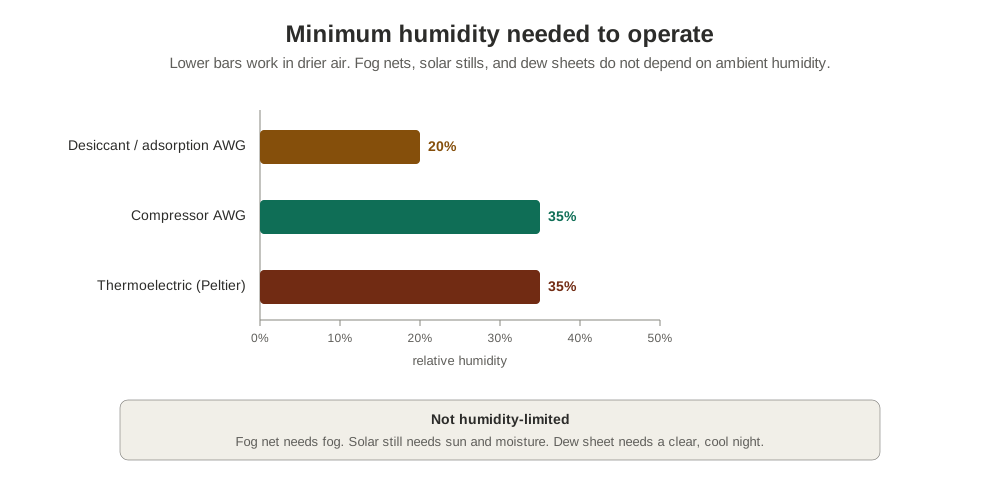
Figure 8. Desiccant and adsorption systems work in drier air than compressor or thermoelectric units.
Choosing the right method
The decision mostly comes down to two questions: do you have power or fuel, and what does the local climate give you for free. The guide below walks through that logic.
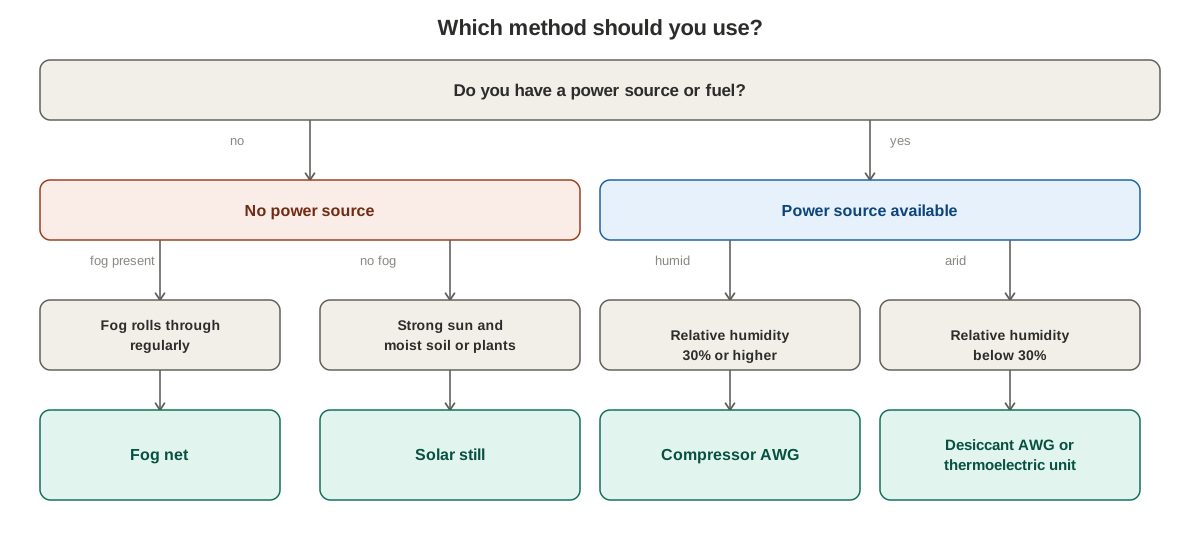
Figure 5. Decision guide for selecting a water-from-air method.
Before you drink it
Powered atmospheric water generators filter and re-mineralize their output as part of the build, but anything harvested passively, fog, dew, or a solar still, should still be treated before you rely on it for drinking.
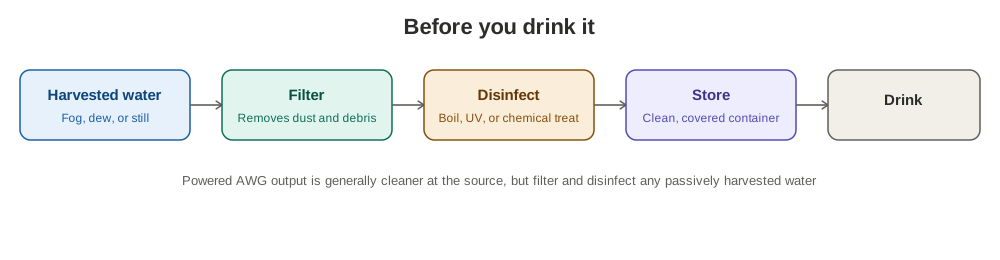
Figure 9. Filter and disinfect passively harvested water before drinking it.
Field notes
| Powered AWGs need routine filter and coil maintenance. Treat them like an appliance, not a set-and-forget system. |
| Fog nets and dew sheets need a pilot test at your specific site before you invest in a large build. Yield varies enormously by microclimate. |
| Any atmospheric water source is not automatically sterile. Fog and dew water in particular can carry airborne dust and microorganisms, so filter and, where possible, treat it before drinking. |
| Solar stills also work on salt water or contaminated ground water, since distillation leaves the contaminants behind. That makes them useful in coastal or flood scenarios, not just deserts. |
| None of these methods should be your only water plan. Stored water and a reliable primary source come first. Atmospheric water harvesting is a resilience layer, not a replacement for planning. |
Continuity fiction note
Readers who want to see communications and continuity tradecraft play out in a fictional high-stakes setting may enjoy The Continuity Chronicles series, The Meadow Protocol, The Brush, and Unassigned Authority, with Book 4 in development. More at thecontinuitychronicles.net.
Semper Paratus, Semper Gumby