Skip to content

Fortune Favors the Prepared

Semper Paratus, Semper Gumby

Menu
  • The Continuity Chronicles
    • THE RANCH
    • Inside the Meadow
      • LONG LINES
    • GlobalTec – Company Profile
      • GlobalTec Network
    • 3C’s COMMUNICATIONS
    • Alex’s Demolition & Construction
    • McAllister Outfitting
    • High Country Air
    • Pikie’s Perfect Cast
  • Daily Threat Reports
        • DAILY THREAT REPORT
        • DAILY THREAT REPORT – LITE
        • DAILY PREPAREDNESS BRIEF
        • Acronym & Abbreviations Glossary
        • DTR Source Registry
        • Area-Specific Assessment Report
        • COMMS WATCH
        • THE HOUSEHOLD BRIEF
        • FLASH REPORTS
        • SOFT TARGET SECURITY BRIEF
        • FINANCE SECTOR
        • HEALTHCARE SECTOR
        • TRANSPORTATION & LOGISTICS SECTOR
        • AI, DATA CENTER & INFRASTRUCTURE REPORT
        • CONSTRUCTION & MANUFACTURING SECTOR
        • Strategic Intelligence Supplement
  • About
        • The Why
        • Vision and Mission
        • Services
          • Business Resiliency
        • Testimonials
        • Insider
        • Friends
          • Patriot Volunteer Examiner (VE) Team
          • Angery American
          • Signal Stuff
          • Forward Observer
  • Communications
        • Stump Knocker
          • SOI
          • STUMP KNOCKER DMR UPDATES
          • MMDVM Hotspot
        • Preparedness Communications
          • What Radio Should I Get for Preparedness?
            • What Radio to Buy?
              • What Radio to Buy? – video
              • Ham Radio on a Budget
              • Live – What Radio to Buy?
              • Portable Radio Kit
              • Mobile Communications
          • Emergency Communications Principles
          • Communications Options
          • Starter Radio Paths by Preparedness Scenario
          • How Communications Fail
          • HF Communications
            • SHTF HF Communications
            • Simple Antenna Builds for HF – video
            • NVIS in Amateur Radio
        • Amateur (HAM) Radio
          • Why Do I Need a Ham License?
            • How to Obtain Your Amateur Radio License
              • Amateur Radio Learning Resources
              • Finding a Ham Exam
                • HAM Exam Accommodation
              • Getting Into Ham Radio – Video
            • Are You Expired?
            • Why You Should Upgrade to a General Ham License
          • HAM Simplex Frequency Card
          • Analog versus Digital
          • Analog vs Digital Voice: A Preparedness-Focused Comparison
          • CTCSS and DCS
          • Programming Radios with Software
          • ARES, RACES, ACS and AUXCOMM
          • Ham Radio Beyond Line-of-Sight
            • Linked Analog Repeaters
            • EchoLink and IRLP
            • AllStarLink
            • Yaesu System Fusion & WIRES-X
            • D-STAR
            • Digital Mobile Radio (DMR)
            • P25 in Amateur Radio
            • NXDN in Amateur Radio
            • Amateur Radio Satellites (AMSAT)
            • The 60-Meter Band (5 MHz)
          • Meshtastic
          • HAM VoIP
        • Personal Radio Services
          • FCC Rules for Personal Radio Services
          • Family Radio Service (FRS)
          • General Mobile Radio Service (GMRS)
            • GMRS Repeaters
            • Getting a GMRS License
            • FRS / GMRS / MURS Frequency Card
          • Multi-Use Radio Service (MURS)
          • Citizen Band (CB) Radio
            • CB Frequency Card
        • Other Radio Services
          • Communications Continuity Programs and Capabilities
          • Marine Communications
        • Cell Sites and Their Services
          • When Cell Service Fails
          • Radio over LTE and Rapid Radios
            • LTE Radio Comparison
        • Satellite Communications
          • America’s Secret Eyes
          • The Commercial Eye
          • Seeing Through Everything (SAR)
            • Remote Area Emergency Communication Devices
            • Which Beacon Should You Carry?
          • Personal Satellite Communications
        • Wired Communications
          • MAG Phone System
          • TA-312/PT Field Telephone and SB-22/PT Switchboard
          • Understanding Telephone Wiring
          • The AT&T Long Lines Program
        • Communications Planning
          • Communications Plan Annex
            • Communications P.A.C.E.
            • Finding Information for Your Communications Plan
            • Area-Specific Assessment Report
          • Automatic Link Establishment (ALE)
          • Understanding Communications Resiliency
        • Communications Resiliency Programs
          • ARES, RACES and ACS
          • Auxiliary Communications (AUXCOMM)
          • Military Auxiliary Radio System (MARS)
          • U.S. Coast Guard Auxiliary Communications
          • Civil Air Patrol Communications
          • The 60-Meter Band (5 MHz)
            • Understanding the 60-Meter Band
        • Government Communications Continuity Programs
          • Government Emergency Telecommunications Service (GETS) and Wireless Priority Service (WPS)
          • National Warning System (NAWAS)
          • National Interoperable Frequencies
          • The FEMA National Net (FNARS)
          • National Emergency Communications Network (NECN)
          • The SHARES Program
          • State Emergency Capability Using Radio Effectively (Operation SECURE)
          • The High Frequency Global Communications System (HFGCS)
          • Satellite Mutual Aid Radio Talkgroup (SMART)
          • The AT&T Long Lines Program
        • Communications & Emissions Discipline
          • Communications Security (COMSEC)
            • Book Cipher
            • One Time Pads (OTP)
              • Decrypting One Time Pad Message
              • One Time Pads (OTP) Live Video
              • One Time Pad Training
          • Cryptographic Security (CRYPTOSEC)
          • Transmission Security (TRANSEC)
          • Communications Transmission Discipline (TRANSDISC)
          • Emissions Control (EMCON)
          • Communications & Emissions Training Framework
        • DMR Programming
          • DMR Programming – Talk Groups
          • DMR Programming - Roaming
          • MMDVM and Yaesu System Fusion (YSF)
          • Encryption in DMR Radios
        • Digital Mobile Radio (DMR) Networks
          • WR3IRS Interstate DMR Network
            • South Central PA (SC PA)
            • North East PA (NE PA)
            • Washington-Baltimore (W-B)
            • West Central Florida (WCF)
          • Florida Digital Amateur Radio Network (F-DARN)
          • Southeast Florida DMR Repeater Network W2GGI
          • Virginia DMR (DMRVA)
          • NC PRN DMR Network
          • SC Hospital Emergency Amateur Radio Team (SCHEART)
          • HEARS – Hospital Emergency Amateur Radio System
          • New England Digital Emergency Communications Network (NEDECN)
        • Baofeng/BTECH Radios Quick Guide
          • Manually Programming a Baofeng Radio – Video
          • A User’s User Manual for Baofeng Radios
        • MESSAGES & REPORTS
          • Phonetics
          • Procedure Words (Prowords)
          • Date Time Group (DTG)
          • NTS Radiogram Form
            • ARL Numbered Radiograms
          • SALUTE, SPOT, and SALT Reports
          • ACE/LACE Reports
          • GOTWA Report
          • CASREP (Casualty Report) Format
          • MEDEVAC Request Report
          • Formatted Messages (downloads)
        • Communications Knowledge Library
          • Communications Resiliency
          • Radio Etiquette, Jargon, and Best Practices
          • AmRRON RESOURCES & REFERENCES
          • Anytone Programmable Keys
          • Phonetics
          • Amateur Radio Colorado
            • Colorado Linked Repeater Systems
        • COMMUNICATIONS REFERENCES
  • Planning
        • Family Emergency Plan – The Basics
          • Family Emergency Plan
          • Why Every Family Needs an Emergency Plan
        • Family Contingency Binder
          • Family Contingency Binder MindMap
        • Triggers
          • Preparedness Conditions – PREP-CON
            • Preparedness Conditions (PREP-CON) MindMap
          • Space Weather
        • Family Emergency Plan Workbook
          • Family Emergency Plan Workbook - owner resources
            • Area-Specific Assessment Report
            • Family Emergency Planning Form
            • Communications Plan
              • P.A.C.E.
            • Emergency Evacuation
            • Emergency Food Supplies
            • Family Contingency Binder
            • Message Drops
            • Get Home Bag
            • Bug Out Bag & Bins
            • Miscellaneous
        • Next of Kin Workbook
        • METT-TC: Decision Discipline
          • METT-TC - tactical planning
        • Planning Your Preps
          • Charity in Planning
        • Mutual Assistance Group
          • Mutual Assistance Groups (MAGs): Skills, Vetting, and Building Real Resilience
          • Mutual Assistance Group (MAG): Recruitment Code of Conduct
          • MAG: Private Vetting & Intake Process
          • Compartmentalization in Mutual Assistance Groups (MAGs)
          • Resiliency Index
          • Continuity of Government & Application to MAGs
  • Threat Assessment
        • Personal Preparedness Assessment Workbook
          • Personal Preparedness Assessment Report
          • Personal Preparedness Assessment Workbook - owner resources
        • Readiness Conditions for Preparedness
          • PREP-CON - Preparedness Conditions
          • COMCON – Communications Readiness Condition
          • CONCON – Civilian Continuity Conditions
        • Readiness Conditions – Hierarchy and Relationships
          • LERTCON – Alert Condition
          • DEFCON – Defense Readiness Condition
          • COGCON - Continuity of Government
          • INFOCON – Information Operations Condition
          • FPCON – Force Protection Condition
          • EMERCON – Emergency Condition
          • CYBERCON – Cyber Readiness Conditions
          • CPCON – Cyberspace Protection Condition
          • WATCHCON – Watch Condition
          • SIPRNet – Secret Internet Protocol Router Network
          • REDCON – Readiness Condition
          • NC3CON – Nuclear Command, Control, and Communications
        • Readiness Conditions in The Conspiracy Chronicles
          • CERCON – Cerberus Readiness Condition
          • COMCON – Communications Readiness Condition
          • C-OPS – CERBERUS Operational Status Conditions
          • CONCON – Civilian Continuity Conditions
        • Being Prepared for Civil Unrest
          • Civil Unrest – Area Intelligence
          • Civil Unrest – Be Prepared
          • Civil Unrest – Defense
          • Civil Unrest – Defense (part 2)
        • Staying Informed Before, During and After Emergencies
          • Weather Awareness
          • Space Weather
        • Area Intelligence
          • Area-Specific Assessment Report
        • National Power Grid
  • Intelligence
        • Community Intelligence
          • Area Intelligence – Now!
            • Area-Specific Assessment Report
          • Community SITREP
          • Radio Traffic Situational Analysis During Emergencies
            • Radio Traffic Situational Analysis (RTSA) -TRAINING CURRICULUM
        • Operations Security (OPSEC)
          • OPSEC for Teens
          • OPSEC for Kids
          • The Gray Man
          • OPSEC: Don't Become the Target
          • Counterintelligence Tradecraft for the Prepared
        • Intelligence Gathering & Analysis
          • Signals Intelligence (SIGINT) – the basics (2020)
          • Signals Intelligence – Information Gathering Basics (2022)
          • Signals Intelligence (SIGINT)
            • Communications Intelligence (COMINT)
              • Short Wave Scanning
              • Communications Continuity Programs and Capabilities
              • Staying Informed Before, During and After Emergencies
              • Integrated Public Alert and Warning System (IPAWS)
            • Electronic Intelligence (ELINT)
            • Tactical Electronic Intelligence (TACELINT)
          • Open-Source Intelligence (OSINT)
            • How to Conduct a Daily Threat Analysis Using OSINT
          • Measurement and Signature Intelligence (MASINT)
          • Overhead Imagery & Geospatial Intelligence (IMINT / GEOINT)
            • America’s Secret Eyes
            • Seeing Through Everything (SAR)
              • Which Beacon Should You Carry?
          • Technical & Infrastructure Intelligence (TECHINT)
          • Electronic Surveillance (ES)
          • Electronic Counter-Surveillance
          • The Five Eyes Satellite Intelligence Network
          • SALUTE, SPOT, and SALT Reports
        • Understanding Intelligence Analysis Tools
          • Understanding Analysis of Competing Hypotheses (ACH)
            • ANALYSIS OF COMPETING HYPOTHESES (ACH) - TRAINING CURRICULUM
          • Understanding MDCOA
          • Understanding OAKOC
        • INTELLIGENCE REFERENCES
  • Medical
        • Medical Training
          • Patient Assessment & Casualty Management
            • MARCH-PAWS Rapid Assessment
              • MARCH-PAWS TRAINING CURRICULUM
            • DCAP-BTLS – Secondary Trauma Assessment
            • SAMPLE + OPQRST Secondary Assessment
              • Medical History as a Preparedness Skill
                • Medical History as a Preparedness Skill – TRAINING CURRICULUM
            • START Triage
            • MEDEVAC Request Report
            • Patient Assessment – Documentation
              • Patient Care Report Forms
              • CASREP (Casualty Report) Format
        • Medical Kits
          • Individual First Aid Kit (IFAK)
          • BooBoo and IFAK Kits Video
          • BooBoo & IFAK Kit Mind Map
          • Large Kit - video
        • Medical Myths
          • Medical Myths – Tampons
          • Medical Myths – Ingested Poisoning
        • MEDICAL REFERENCES
  • Transportation
    • Transportation Plan B
    • Improvised Transportation
    • Preparedness For Winter Travel
  • Animals
    • Preparedness for Pets
  • Food
        • Why You Should Start a Food Storage Plan
        • Food Storage Quick Start
        • Buying in Bulk
        • Inventory Tracking
        • FOOD PRESERVATION RESOURCES
  • Water
  • Power
        • Power Grid
        • UPS
  • Bags etc.
        • Bug Out versus Get Home Bags
        • Get Home Bag – Contents
          • Get Home Bag – video
          • Get Home and Bug Out Bags - video from live 2-10
  • Navigation & Signalling
        • Sketched Strip Map
        • Emergency Signaling
        • Covert Signals
        • Which Emergency Beacon Should You Carry?
  • References
        • PLANNING & OPERATIONS
        • SECURITY OPERATIONS
        • INTELLIGENCE
        • CRYPTOLOGY
        • COMMUNICATIONS
        • REPORTING FORMATS
        • GENERAL/MISC
        • MEDICAL
        • FOOD PRESERVATION
        • CRITICAL INFRASTRUCTURE
        • SURVIVAL MANUALS
        • OPSEC
        • COUNTER INSURGENCY & CIVIL DISTURBANCE
        • EMP / CME
        • Training
          • Training Videos
          • One Time Pad (OTP) Exercises
            • 45662
            • 222135ZDEC22
  • Blog
    • Boomer
      • Day 1 – The Journey Home
      • Day 2 – First Day in the New Home
      • Day 3 – More Training
      • Day 4 – Dad Goes Back to Work
      • Day 5 – A Day at Home with More Training with Dad (Boomer’s version)
      • Day 6 – More Training with Dad at Home
      • Day 7 – Dad Goes Back to Work, Boring Day
    • Mountain Readiness Fallout Workshops
    • Mapping DMR Repeaters
    • COMMUNICATIONS RESILIENCY
    • Getting The Message Through
    • What are you preparing for?
    • Never Let an Opportunity Go To Waste
    • Consequences
    • DO NOT REPLY
    • Space Weather Warning
    • Good, and Sad, News
    • Necessity vs. Luxury
    • Don’t Put off Until Tomorrow
    • No Plan Survives First Contact
    • Threat and Hazard Identification and Risk Assessment (THIRA)
    • Live – What Radio to Buy?
    • Big Daddy Unlimited Affiliate
    • Food – Tue 16th 7pm MST
    • Live from 2021-2-3
    • Live 2021-01-26
    • FLASH SALE
    • Live 2021-01-11
    • What Is Freedom?
    • Preparedness for Pets
    • What If The Lights Go Out?
    • Hoarding or Prepping?
    • Why Do I Need a Ham License?
    • How Bad is the SolarWinds Orion Issue?
    • How To Begin Prepping
    • Members Only Live Videos
    • Live 11/24
    • Ham Radio VoIP Phone
    • Training Calendar
    • A Chat (with some whisky)
    • Blog 2020 11 02
    • Live with Charlie Hogwood
    • EARTH EX 2020
    • A Live with Angery American
    • Have You Woken Up Yet?
    • BUG OUT READY
    • The Gray Man
    • Area Intelligence – Now!
    • Being Prepared for Civil Unrest
    • It Depends
    • The Art of Being Prepared – The New Prepper
    • Get Home versus Bug Out Bags
    • Why You Need an IFAK AND Training
  • Shop
  • Contact
    • Mailing List
  • Media and Press
Menu

How To Begin Prepping

Posted on 2020-12-092020-12-09 by Nick Meacher
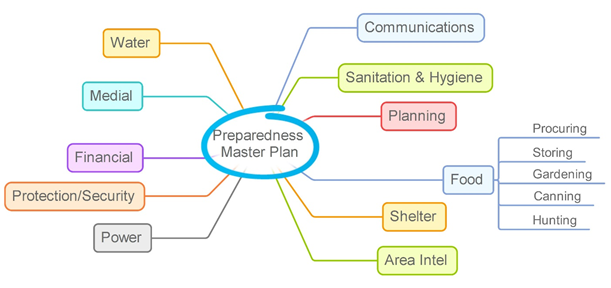
The full version of this mind map is available in the store as a poster

This is an updated version from an article I originally wrote for Survival Dispatch back in August 2018. It includes a link to a resource guide page for subscribers with a large (and growing) collection of manuals, guides and resources related to food storage, canning, cooking, etc. As with all documents on this site I strongly urge you to download and then PRINT them and keep in a binder with your food storage or other preps that they related to.

Usually when someone hears the word ‘prepper’ they think of a ‘survivalist,’ but they are very different. 

Prepper is defined as a person who prepares something or prepares for something. 

Survivalist is defined as; a person who practices survivalism. Survivalism is defined as; an attitude, policy or practice of survival. Survival is defined as; the act or fact of living longer than another person.

So while they are related, a survivalist is more of an attitude, whereas a prepper is someone who has prepared. Both require a plan, both require training and skills.

This page is an overview, a getting started. On this web site you will find sections and pages that go into more details on each of the areas mentioned below. As the pages get built I’ll add links.
So how do we begin? 

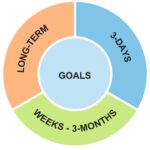
Well, first we must have the right attitude, we must decide that we are going to be prepared for.  This will depend somewhat on where you live; tornado, hurricane, or a power outage could impact anyone.  You should start small, plan on having enough food for 5 days.  You can easily accomplish this by adding an extra box or can of something you normally eat each time you go shopping and putting it in a separate box of cupboard. 

Adding water can be done a number of ways, Mylar water bags that go into a cardboard box, a water bob that you put into your bath tub and fill, gallon jugs or cases of water.  For six plus months don’t rely on water in plastic bottles as some can leach chemicals from the plastic into the water.

6-12 Months

As you start moving to six to twelve months a useful tool is one of the 12-month food prep calendars, usually found on web sites associated with members of the LDS church. These recommend what to buy each month to add to your stores, including non-food items such as toilet paper, soap, etc.  If you are a coupon collector then these can help you build supplies and save money. 

Storage

One challenge you can face when aiming for a year’s worth of supplies is storage.  You might have to get innovative, but if you are using shelves make sure they are heavy duty. I’ll be writing an article specific on ideas in the near future.

Gardening and Canning

If you have a garden choose to grow things that you can freeze dry or can. While you can freeze some this should not be your main plan in case of loss of power. 

Almost all vegetables can be canned.  Canning is not difficult, just invest in a good pressure canner (not a cooker) and get the Balls Preserving book and follow instructions.  Balls has a number of other short guides in pdf and I’ve collected them on this page together with other resources.

Food Resource Guides

Make sure the jars are cleaned well before using, a dish washer on hot and heated drying works or you can use a large container and a hot water ‘bath.’  It’s easy to determine if a seal on a jar has worked, as the lid will be sucked in and won’t ‘pop’ when you push on it.  Canned food will keep almost indefinitely. If the lid ‘pops’ out do not eat. 

Some areas have farms or orchards where you can pick your own vegetables or fruit, saving you considerable compared to store bought goods, and much fresher.  You can also look at farmers markets.  You can also can meat, good way to store meat long time without getting freezer burn, plus it doesn’t matter if you loose power.

For longer storage you are looking at having items packed in cans or sealed in mylar bags.  Items in store bought cans will last long after their ‘use by’ date, again as long as the can isn’t bulging it should be good.  Buying case lots at bulk stores such as Costco, Sam’s etc. can be a good way to add to your stores.  You will find #10 cans of tuna and some vegetables at the warehouse stores. 

Another, often overlooked, place for #10 cans of goods is the LDS Home Storage Center.  Every large city has them and anyone can go and purchase from them.  They carry #10 cans of carrots, apple slices, several types of beans, flour, nonfat milk powder, macaroni, oats, sugar, wheat and other items.  You can order on line and have items shipped or go in person, which is much cheaper obviously.  The list of items they carry and prices for pick up can be found here.  You can by individual #10 cans or by the case (6 cans per case) and is an easy way to quickly build some food stores.  Their site also lists storage duration and other useful information. There are also cookbooks that people have put together with recipes using basic food storage items available from the Store House.

Food Storage Recipes

New Ideas for Cooking with Basic Food Storage

Bulk Storage

The ‘next level’ for food storage is bulk buying items such as rice, grains and legumes and repacking into mylar bags for 20-30+ years of storage.  If you have a membership to Costco, Sams, etc. you can pick up 25lb or 50lb bags of rice and beans and 20lb boxes of oats fairly cheaply.  You can get mylar bags and oxygen absorbers from places like www.dicountmylarbags.com or even the LDS Home Storage web site.  You should use bags that are at least 5mil thick, so read carefully when you see deals on Amazon or other sites, the ones I’ve seen are only 3mil thick.  You do not need an expensive heat sealer to seal the bags; place the bag over a piece of 2×4 wood and use an iron.  Make sure you have got most of the air out before putting the oxygen absorber in and sealing the bag.  Do not use an oxygen absorber with sugar, you will end up with a very large sugar ‘brick.’

Before buying mylar bags decide what size you want and what you are going to store them in.  Many people use 5-gallon mylar bags placed into 5-gallon food grade buckets.  When stacking put 2×4’s across the top to spread the weight of the next layer, otherwise the lids will break as they are the thinnest. 

The disadvantage with 5-gallon buckets is that you are opening 5-gallons worth of food.  If you are a small family, or single, you might want to consider 1 or 2-gallon bags.  You can place several in a 5-gallon bucket or use a heavy-duty plastic bin. Another advantage of the smaller bags is that you can give away a small bag to someone in need without giving away that you have 5-gallon bags stored.  One important note: use a permanent marker to write the contents and date packed on the bags BEFORE you start to pack other food or put them away.

Final Thoughts

Obviously, we’ve only looked at food and water storage in this article, there are many other areas that we should consider to be prepared for situations that we may encounter or that could impact where we live. 

Knowing what specifically to prepare for comes from doing a threat and hazard assessment. A detailed ‘how to’ will be coming soon.

In the mean time check out other articles under the FOOD category.

Remember, Fortune Favors the Prepared

Related

Login with Patreon

Login with Patreon

Search Site

Products

  • The Continuity Chronicles Seal Decal The Continuity Chronicles Seal Decal $5.00 Original price was: $5.00.$3.00Current price is: $3.00.
  • Family Emergency Plan Workbook - Patreon Family Emergency Plan Workbook - Patreon $19.95
  • Personal Preparedness Assessment Workbook - Patreon Personal Preparedness Assessment Workbook - Patreon $19.95
  • The Next of Kin Workbook - Patreon The Next of Kin Workbook - Patreon $23.95
  • Personal Preparedness Assessment Report Personal Preparedness Assessment Report $179.95
  • Family Emergency Plan + Next of Kin Workbooks Family Emergency Plan + Next of Kin Workbooks $59.95 Original price was: $59.95.$49.95Current price is: $49.95.
  • The Next of Kin Workbook The Next of Kin Workbook $29.95
  • ASAR — 50 Mile Radius ASAR — 50 Mile Radius $139.95
  • ASAR 50-MILE + FAMILY EMERGENCY PLAN WORKBOOK ASAR 50-MILE + FAMILY EMERGENCY PLAN WORKBOOK $169.95
  • ASAR — 50 Mile Radius - Patreon ASAR — 50 Mile Radius - Patreon $39.95
  • THE COMPLETE LIBRARY BUNDLE THE COMPLETE LIBRARY BUNDLE $109.38 Original price was: $109.38.$85.00Current price is: $85.00.
  • THE SERIES STARTER BUNDLE THE SERIES STARTER BUNDLE $29.98 Original price was: $29.98.$22.49Current price is: $22.49.

Cart

©2026 Fortune Favors the Prepared | Built using WordPress and Responsive Blogily theme by Superb