
The U.S. Military’s Worldwide Nuclear Command Radio Network

This article references parts of the story in my fiction books in The Continuity Chronicles:
The Meadow Protocol
After The Brush
Unassigned Authority
Available in my store for signed paperback and hard copies and from Amazon to include Kindle and Audible.
The High Frequency Global Communications System (HFGCS) is one of the United States military’s most important — yet publicly observable — strategic communications networks. Operated primarily by the U.S. Air Force, HFGCS provides worldwide high-frequency (HF) radio connectivity for strategic forces, including nuclear command and control, bomber operations, and survivable communications during global crises.
The system acts as a global radio backbone capable of reaching aircraft, ships, and ground stations anywhere on Earth using 3–30 MHz high-frequency radio propagation.
For radio monitors, intelligence analysts, and preparedness enthusiasts, HFGCS is also one of the most recognizable military communications systems because many of its transmissions are unclassified but operationally significant, often heard as EAMs (Emergency Action Messages).
Purpose of HFGCS
HFGCS exists to ensure that U.S. strategic forces can always receive orders, even if satellites, fiber networks, or other communications infrastructure are degraded or destroyed.
Its primary missions include:
• Strategic nuclear command and control
• Communications with nuclear-capable bombers
• Communications with airborne command posts
• Global reachback for deployed forces
• Backup communications when satellites fail
Because HF radio bounces off the ionosphere, signals can travel thousands of miles beyond the horizon. This makes HF communications resilient during wartime or space-based disruption.
In short:
If everything else fails, HF still works.
How HFGCS Works
HFGCS uses a global network of high-power HF radio stations that transmit voice and digital traffic across multiple frequencies.
Key characteristics include:
Frequency Range
3–30 MHz HF spectrum
Transmission Power
Typically 10 kW – 20 kW transmitters
Modulation
Upper Sideband (USB) voice
Message Types
• Emergency Action Messages (EAMs)
• Skyking messages
• Operational tasking
• Strategic force coordination
Aircraft such as E-6B Mercury TACAMO aircraft and strategic bombers routinely monitor these frequencies.
Commonly Monitored HFGCS Frequencies


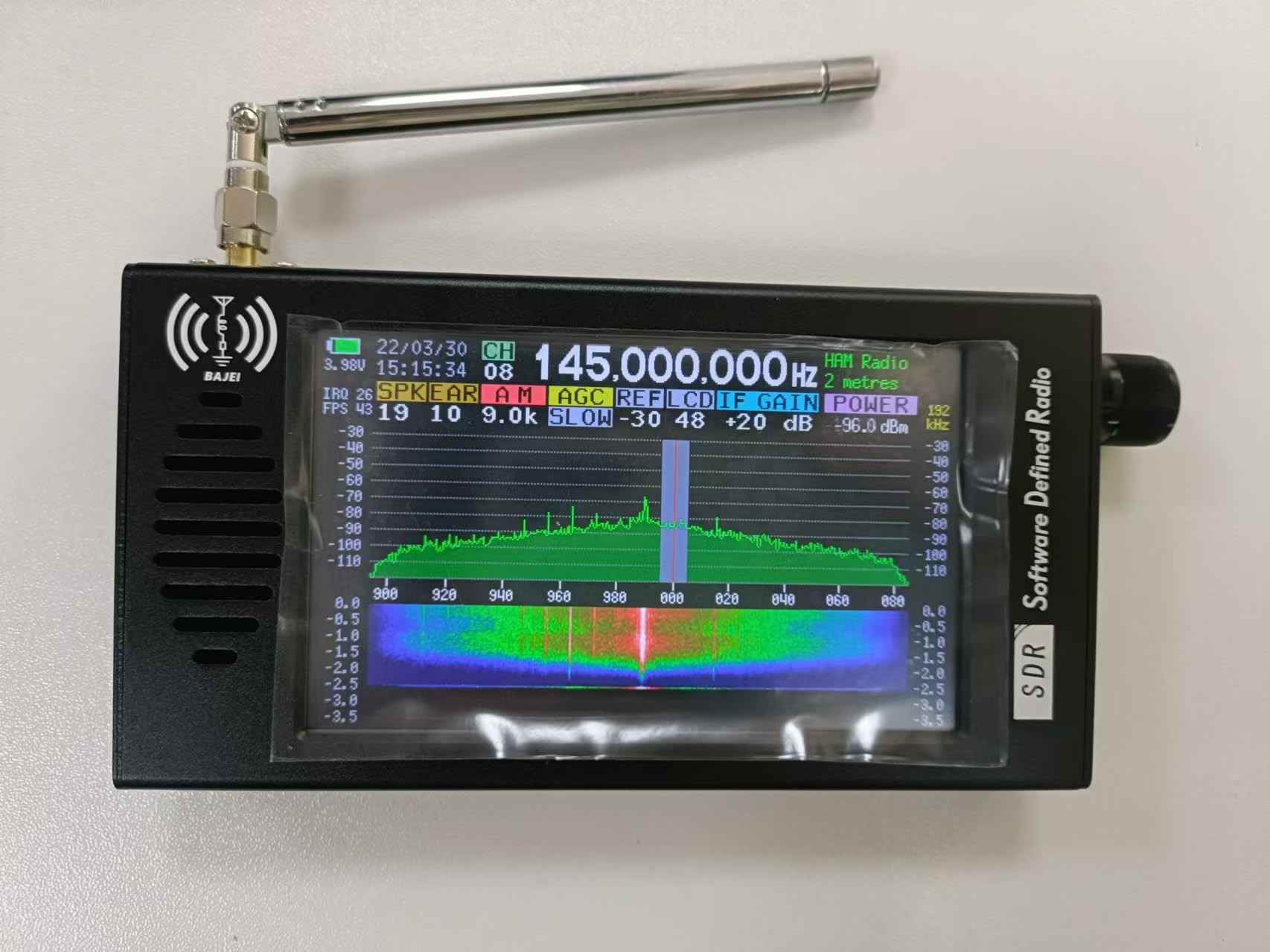
4
Radio hobbyists and OSINT analysts frequently monitor several HFGCS frequencies. These frequencies may change based on propagation conditions, but some of the most commonly heard channels include:
| Frequency | Typical Use |
|---|---|
| 4724 kHz | Nighttime primary |
| 6739 kHz | Day/night transition |
| 8992 kHz | Primary daytime frequency |
| 11175 kHz | One of the most active |
| 13200 kHz | Daytime |
| 15016 kHz | Long-distance daytime |
| 31175 kHz | High propagation conditions |
One of the most recognizable transmissions is the Emergency Action Message (EAM).
These messages consist of rapid phonetic code groups, such as:
CHARLIE SIERRA FOXTROT PAPA...
NINER FOUR TWO ALPHA...
EAMs may contain dozens or hundreds of characters, transmitted in structured blocks.
Importantly:
Most EAM transmissions do not indicate a crisis. They are often routine exercises designed to ensure the network remains operational.
Emergency Action Messages (EAM)
EAMs are the primary command format used to transmit strategic orders.
They are designed to be:
• Short
• Encrypted through one-time pads or codebooks
• Resistant to interception exploitation
• Deliverable via multiple communication systems simultaneously
The same message may be transmitted over:
• HFGCS HF radio
• Military satellites
• Ground command networks
• Airborne command posts
This redundancy ensures that strategic forces always receive orders, even during large-scale attacks.
The Global HFGCS Ground Network


4
HFGCS relies on a network of transmit and receive stations positioned around the world to ensure global coverage.
Key sites historically associated with HFGCS include:
• Andrews AFB, Maryland
• Offutt AFB, Nebraska
• Croughton Communications Station, UK
• Diego Garcia
• Andersen AFB, Guam
• Yokota AB, Japan
These facilities operate large HF antenna arrays, often including:
• Curtain antennas
• Rhombic antennas
• Log-periodic arrays
Each antenna field is designed to direct radio energy toward specific global regions.
Why HF Radio Still Matters
Despite modern satellite communications, HF radio remains essential for strategic military operations.
Advantages include:
Independence from satellites
HF signals rely on the ionosphere rather than space infrastructure.
Global reach
Signals can travel thousands of miles without relays.
Resilience during war
HF radio remains functional even during satellite disruption or anti-space warfare.
Low infrastructure requirements
Aircraft and mobile units can receive transmissions using relatively simple equipment.
This makes HFGCS a critical backup communications system for nuclear command and control.
Monitoring HFGCS as an OSINT Source
For analysts and preparedness-minded individuals, HFGCS transmissions can provide interesting OSINT indicators.
Changes in activity levels, message frequency, or unusual call patterns may correspond with:
• Strategic force exercises
• Bomber deployments
• Military alerts
• Global crises
However, interpretation requires caution. Routine training traffic can often resemble real-world operations.
Still, for radio enthusiasts and intelligence watchers, monitoring HFGCS provides a rare window into the operational heartbeat of strategic forces.
The Continuity Connection
In a large-scale crisis where satellites fail, infrastructure collapses, or cyber warfare disrupts modern networks, systems like HFGCS become the backbone of global command and control.
This reality forms part of the background world behind The Continuity Chronicles, where resilient communications systems — from HF radio networks to emergency communications protocols — determine whether governments, military units, and communities can maintain coordination during cascading global emergencies.
Understanding systems like HFGCS provides insight into how continuity of government and strategic command might actually function during a global crisis.
Final Thoughts
The High Frequency Global Communications System is one of the most enduring examples of Cold War infrastructure that remains vital today.
While much of modern military communications has moved to satellites and digital networks, HFGCS continues to operate as a reliable, survivable, and globally reachable communications system for strategic forces.
For radio operators, intelligence analysts, and preparedness professionals, it represents a fascinating intersection of radio science, military doctrine, and global security.